Daybreak & the Merge Wall: OpenAI's Cyber Swing and the Code Velocity Crisis
Daybreak & the Merge Wall
Two stories this week crystallize where AI coding actually is — not where the marketing says, but where the code hits production.
First: OpenAI is going cybersecurity native. Second: The data says we’re drowning in code we can’t ship. Both point to the same conclusion — 2026 is the year the industry stops celebrating raw output and starts grappling with what happens downstream.
OpenAI’s Daybreak Gambit
On June 22, OpenAI significantly expanded Daybreak, their cybersecurity program, shipping two major pieces:
1. GPT-5.5-Cyber — a restricted model for trusted defenders. The deal: validated cybersecurity professionals get access to frontier cyber reasoning for vulnerability analysis, threat modeling, and large-scale codebase auditing. Think of it as Codex, but the output is patches, not features.
2. Codex Security Plugin — an evolution of the Codex agent specifically wired for remediation workflows. It scans repos, validates discovered vulnerabilities, and generates remediation PRs that humans review before merge.
The Codex Security plugin can chain: discover → validate → patch → verify in a single agentic loop, with audit trails at each step.
# What a Codex Security workflow looks like conceptually:
workflow = {
    "scan": "identify vulnerabilities in target repo",
    "validate": "confirm exploitability (no false positive PRs)",
    "patch": "generate minimal, idiomatic fix",
    "verify": "run existing test suite + generate regression tests",
    "audit": "full provenance log for compliance"
}
Why this matters: OpenAI is betting that the next wave of coding agent value isn’t writing more code — it’s securing existing code at scale. With the Patch the Planet initiative, they’re even open-sourcing parts of the pipeline.
The enterprise signal is clear: the model vendor that owns the security workflow owns the repo lock-in.
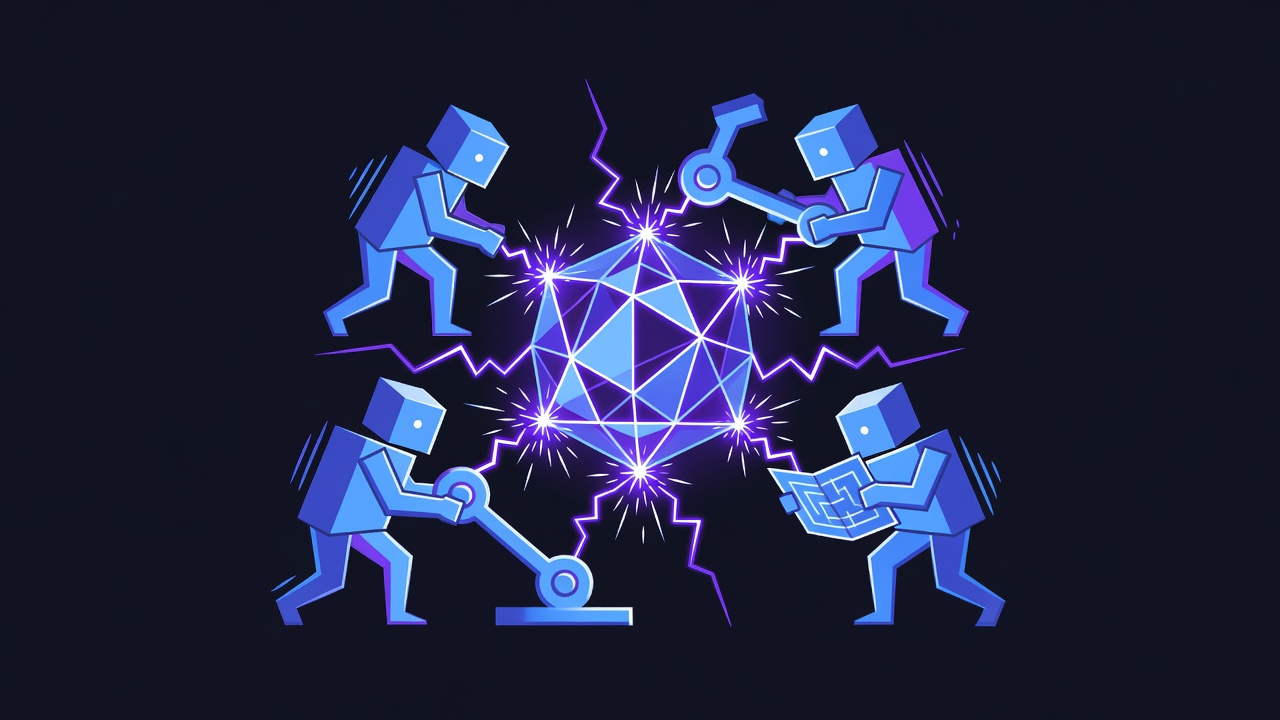
The Merge Wall: Code Is Not Software
While OpenAI builds the pipes, the data finally catches up to reality. The numbers come from NBER Working Paper 35275 — 100,000+ GitHub developers, peer-reviewed, no vendor bias:
The headline:
- AI coding agents increase code volume by ~180% (some studies show up to 3x commits)
- Actual shipped software rises by only ~30%
- Gains attenuate sharply after the “write code” stage
The researchers call it the production funnel. The bottleneck isn’t generation — it’s review, testing, coordination, and integration. AI is perfecting the easy part (writing code) while the hard parts (proving it works, merging it safely, not breaking unrelated systems) remain stubbornly human.
This tracks with what Perforce has been calling the Merge Wall: parallel AI agents generating code faster than any human review pipeline can absorb.
Classic Git Flow + AI Agents:

Agent A ──→ Feature Branch A ──→ ┐
Agent B ──→ Feature Branch B ──→ ├──→ MERGE WALL ──→ Human Review
Agent C ──→ Feature Branch C ──→ ┘         (bottleneck)
Agent D ──→ Feature Branch D ──→            (semantic conflicts)
And the kicker from Sarah Guo’s analysis of the same data: “Measurable engineering parts are commoditizing while private aspects retain value.” The code you can see — style, patterns, tests — AI handles. The code that lives in Slack threads, tribal knowledge, and “we tried that in Q2 and it broke prod”? That’s still human territory.
Figma Closes the Loop
In more agent-infra news, Figma Config 2026 launched an AI agent that doesn’t just design — it commits. The new Figma agent connects to GitHub via MCP, pulls repo context into design files, generates interactive code layers on the canvas, and syncs updates back to PRs.
Design and code finally in the same multiplayer file. The code layers feature lets you literally clone a frontend repo onto a Figma canvas and have the agent generate, iterate, and sync changes bidirectionally.
For the design-to-code pipeline, this is the first time the agent lives in both worlds instead of handoff-documents.
The FrontierCode Benchmark War
Anthropic’s Claude Fable 5 — dropped June 9 — is the current king of FrontierCode, Cognition’s benchmark that tests production-mergeable code, not just functional correctness:
| Model | FrontierCode Diamond | SWE-bench Verified |
|---|---|---|
| Claude Fable 5 | 29.3% | 95.0% |
| Claude Opus 4.8 | 13.4% | ~88% |
| GPT-5.5 | 5.7% | ~83% |
The gap is staggering. Cognition designed FrontierCode specifically to test whether AI agents can produce code that maintainers actually want to merge — style, scope, test coverage, minimal blast radius. Fable 5 at 29.3% on Diamond level means nearly one in three of its PRs meets production quality standards from the first pass.
For comparison: before Fable 5, the best model scored ~5.7%. That’s a 5x improvement in production-ready code generation in under two months.
What It All Points To
The signal from this week’s convergence:
-
Security is the next agent frontier. OpenAI’s Daybreak bet: the value isn’t in writing more code, it’s in fixing what’s already there. GPT-5.5-Cyber for vetted defenders is a deliberate trust-boundary play.
-
Velocity without throughput is theater. MIT’s data is the reality check the “AI writes 17x more code” tweet missed. 180% more code, 30% more shipped. The rest is merge conflicts, review bottleneck, and coordination tax.
-
Benchmarks shape behavior. FrontierCode’s scoring shift is already changing how model vendors optimize — not “does it work” but “would a maintainer accept it.” That’s the right question.
-
Design and code are converging agents. Figma’s MCP-connected agent is proof that the next platform isn’t “AI for designers” or “AI for devs” — it’s both, simultaneously.
The takeaway: Stop measuring your AI coding rollout in commits per day. Start measuring time-to-merge and post-merge incident rate. The teams that figure out the review bottleneck — not the generation bottleneck — win the next 18 months.
Primary sources: OpenAI Daybreak, The Hacker News, NBER Paper 35275, Forbes MIT Study, Sarah Guo, Perforce Merge Wall, Figma Config 2026, Cognition FrontierCode, Anthropic Claude Fable 5