Ollama Raises 65M, Meta Ships Muse Spark 1.1 — Local Agents Get Serious Capital
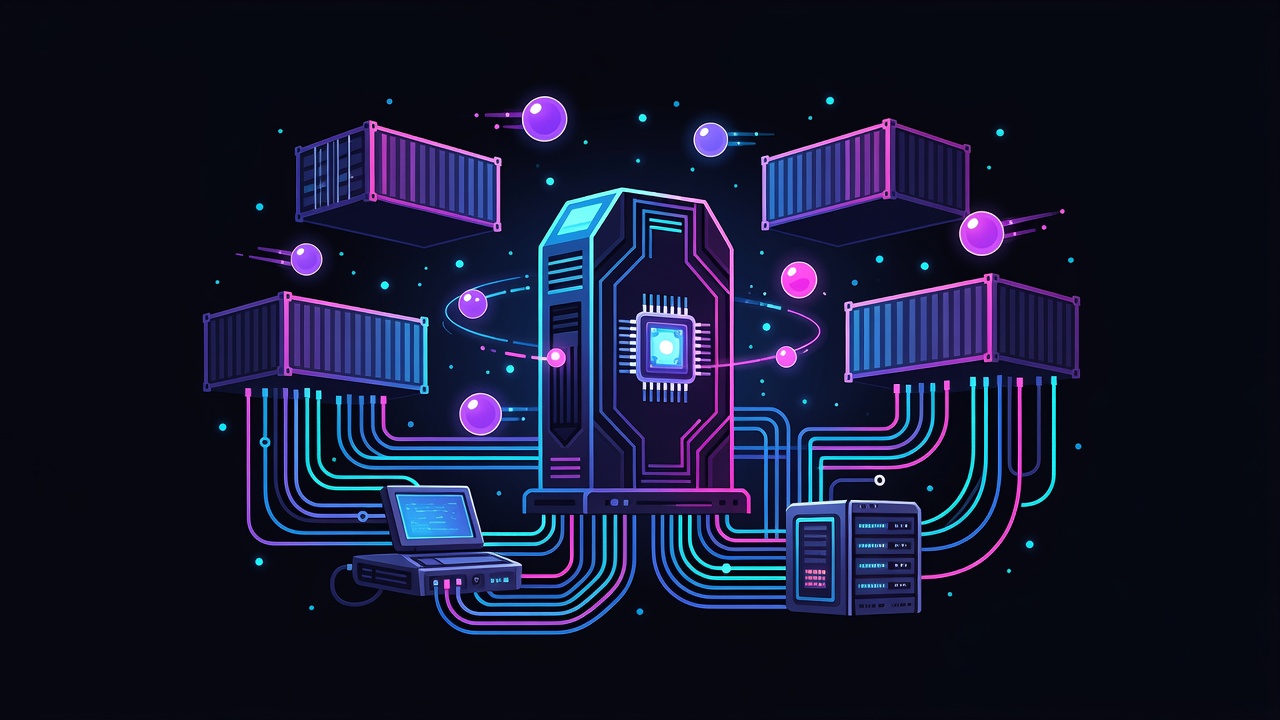
Yesterday your coding agent looked like an attacker on Sophos EDR. The day before that, GPT-5.6 Sol and Grok 4.5 rewrote the cloud router. Today the money and the models moved toward the other half of the stack: local open models and a new hyperscaler coding agent that prices like a mid-tier workhorse.
If you build agent harnesses, this is the briefing about who just got capital, who just shipped, and what that does to your default routing table.
Ollama: 65 million to be Docker for open models
TechCrunch reports Ollama closed a 65 million Series B led by Theory Ventures, with Benchmark, 8VC, Y Combinator, Pace Capital and others joining. Total raised: 88 million. Founders Jeff Morgan and Michael Chiang — the pair who previously built Docker Desktop after Docker bought Kitematic — are not subtle about the analogy.
Numbers that matter for agent builders:
| Claim | Value |
|---|---|
| Monthly developers | ~8.9 million |
| Employees | 14 |
| GitHub | 176k stars, ~17k forks |
| Fortune 500 footprint | ~85% (per Morgan) |
| Hosted tiers | Free through 100/month, billed on GPU time not token caps |
The product thesis is boring and correct: open weights in 2023 were researcher-shaped. Ollama made pull model → run model feel like installing ordinary software. Then agentic open models got good enough to do real coding work (OpenClaw and friends), and the same CLI/API path that was a hobby runner became a production escape hatch from gated frontier APIs.
Morgan told TechCrunch the business inflection was around when larger open models started finishing agentic coding tasks. That tracks with what we already see in harnesses: local Qwen/DeepSeek/Kimi-class runners for volume loops, Sol/Fable-class for hard judgment, Grok 4.5 as the cheap cloud swarm worker.

Practical read: Ollama is not “another chat UI.” It is infrastructure capital for the open-weight side of agent routing — laptop loops, offline harnesses, and neocloud overflow when your corp laptop cannot touch Claude/Codex without a ticket. If you still treat Ollama as a demo toy, re-price it as a platform layer with real funding behind multi-cloud and larger hosted models.
Meta Muse Spark 1.1 enters the coding-agent cage match
Same news window: Meta publicly launched Muse Spark 1.1, the agentic coding-focused multimodal model first previewed in April. TechCrunch and Reuters put list pricing at roughly 1.25 / 4.25 per million input/output tokens — in the neighborhood of Claude Haiku 4.5 and OpenAI’s GPT-5.6 Luna, not Fable/Sol flagship money.
Meta’s pitch is the same workload class everyone is fighting over: multistep agentic tasks, tool use, computer use, bug fix loops, large migrations. Zuckerberg broke a three-year X silence to call it “a strong agentic and coding model at a very low price,” strongest on agentic performance, tool use, and computer use, with “more to come.”
Place it in the router next to this week’s stack:
- Sol / ultra — hard planning, merge judgment, multi-agent coordination (day-after evals we covered yesterday)
- Grok 4.5 — cheap parallel workers at 2/6, Cursor-native
- Muse Spark 1.1 — Meta-priced agentic coding + computer use, another API seat for shops already deep in Llama/Muse tooling
- Ollama-hosted open weights — offline / air-gapped / cost floor for high-volume loops
Meta is late to the commercial coding-agent race versus Claude Code and Codex. Price + distribution inside Meta’s ecosystem is the lever, not “we invented agents first.”
Dogfood theater: Lyzr’s agent ran the fundraise
Not a model release, but a clean signal about where capital thinks agents already work. TechCrunch (via Bloomberg) reports Lyzr — enterprise AI agent platform, Jersey City — used its own agent SivaClaw to run a 100 million Series B at roughly a 500 million valuation.
Claimed agent work: fielded questions from 130+ investors, drafted investment memos, tracked which slides backers lingered on. Lyzr said it pulled ~400 million in interest without founders flying Sand Hill coffee circuits.
Yes, it is marketing. It is also the kind of marketing that only works if the product can sit in a live diligence loop without melting. For agent platform builders, the lesson is not “replace your CFO with a bot.” It is that investor-facing workflows (Q&A, memo drafts, deck analytics) are now in the same “agents ship production work” bucket as coding and ops, and VCs will fund that story at nine figures when the numbers look clean.
OpenAI is buying implementation, not just models
Separate enterprise story: the OpenAI Deployment Company agreed to acquire Northslope, an applied-AI firm with Palantir-rooted forward-deployed engineers — its second acquisition after Tomoro since the deployment arm launched in May with a multi-billion deployment budget (Axios).
This pairs with the week: Sol/Terra/Luna for capability, FDEs for the last mile. Enterprises do not fail on “is the model smart enough?” as often as they fail on “who wires this into our actual systems under change control.” OpenAI is buying people who live inside the customer’s org. Anthropic and others are chasing the same services layer. If your product competes on “we help enterprises adopt agents,” the competitive set now includes OpenAI’s own consulting-shaped deployment company.
Stack notes for Saturday
If you run coding agents this weekend:
- Treat Ollama as funded infrastructure. Budget for hosted GPU-time tiers when laptop VRAM dies mid-harness. Keep an open-weight default in the router so Sol/Fable outages or policy gates do not stop volume work.
- Add Muse Spark 1.1 to the eval matrix for agentic coding + computer-use tasks at Haiku/Luna-class spend. Do not replace Sol for hard judgment until your own SWE-style suite says so.
- Keep the security conversation from yesterday’s Sophos EDR post alive. Local agents still trip DPAPI and LOLBin rules. Scoping parent process + workspace path still beats “dev noise” filters.
- Watch OpenAI Deployment Company M&A. If you sell agent implementation, you are now adjacent to a hyperscaler that is hiring and buying the same FDE profile.
- Router pattern holds: open/local (Ollama) for volume and offline → Grok 4.5 / Spark / Terra-Luna for mid-tier agent loops → Sol / Fable-class for planning and merge.
Useful gear if you are still dual-boxing local runners next to cloud seats: a used NVIDIA A6000 / 6000 Ada for overnight open-weight loops, a USB-C dock that survives three laptop harnesses, and a mechanical keyboard that does not die at 3 a.m. For team seats, Cursor still has the short path to Grok 4.5; Claude Code and Codex map to Sol; Ollama remains the lowest-friction open model install when procurement has not approved another SaaS yet.
The frontier week was about gates and evals. The capital week is about the escape hatch and the late entrants. Fund the floor. Eval the new mid-tier. Do not hard-code one API as your whole agent.
Affiliate disclosure: Amazon links above use our Associates tag (spaghettistor-20). We only link tools we would actually buy for agent harness work.