Open-Weight Coding Agents Finally Deliver Predictable Costs — Azumo Valkyrie Leads
Open-Weight Coding Agents Finally Deliver Predictable Costs — Azumo Valkyrie Leads
Yesterday the bill came due in tokens. Today the story flips to the other side of the ledger: open-weight coding agents that actually tell you what the run will cost before you hit go.
Azumo just shipped Valkyrie, an open-weight coding agent built explicitly around predictable AI development costs. The pitch is simple — no more 30x variance on identical tasks, no more “the model underestimated again” surprises. It runs on consumer or self-hosted hardware with transparent token accounting baked in from the start.
The Predictability Gap
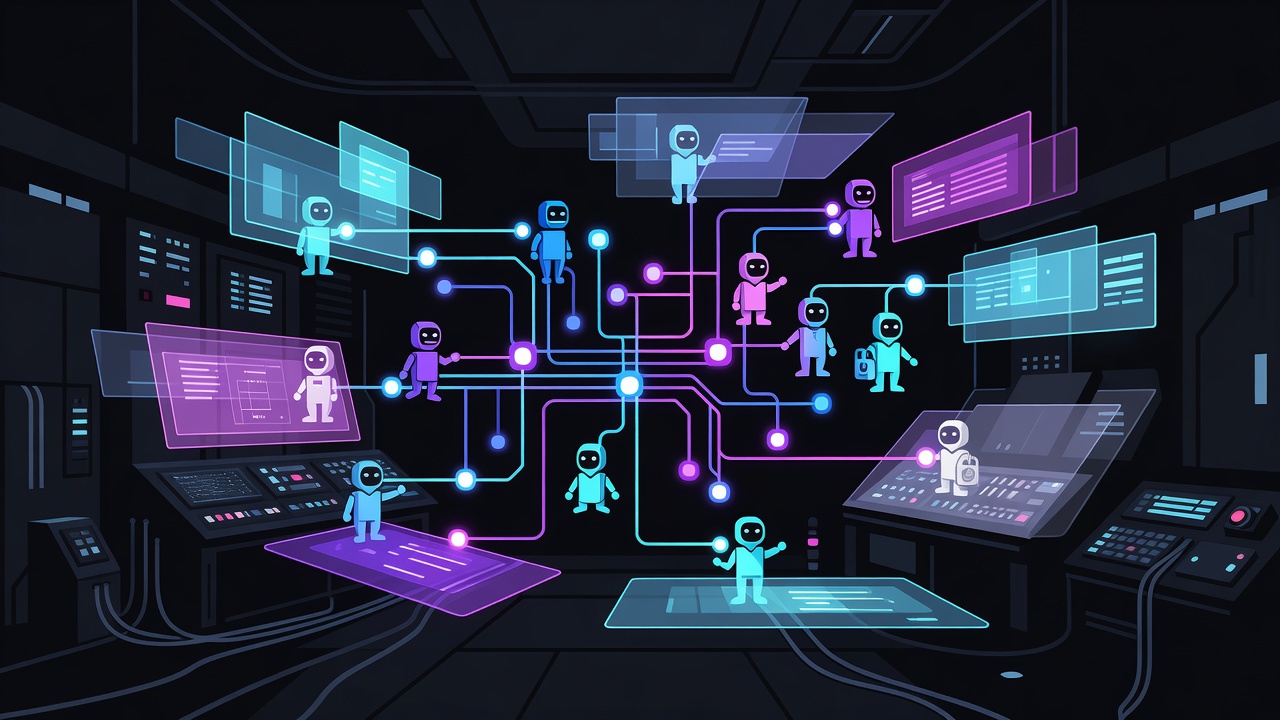
Frontier closed models still dominate raw benchmarks, but the operational reality for teams running agents daily is different. The arXiv token-burn paper from the last 48 hours showed input dominance, massive run-to-run variance, and models that cannot forecast their own spend. Valkyrie attacks the problem at the architecture level: fixed context windows, explicit tool-cost tracking, and a scheduler that kills runaway loops before they eat quota.
Early reports from the MarTech Series coverage show it targeting enterprise teams tired of the $2k–$20k per-dev monthly surprise that Gartner flagged. The open-weight 33B-class base gives teams full control over routing, caching, and fine-tuning without API rate limits or export-control landmines.
Local Stacks Are Closing the Gap Fast
This is not an isolated launch. The same week saw fresh coverage of local Qwen3.6-35B setups running full autonomous coding harnesses on consumer hardware. Ayush Pande’s recent test showed these models extending existing agent loops without sending a single token to the cloud. On narrow but high-value workflows the gap to GPT-5.6 Sol is shrinking — especially once you factor in zero data exfiltration and zero surprise bills.
BenchLM’s June leaderboard still crowns the closed frontier models on raw SWE-bench Verified, but the practical delta on production merge rate is narrowing when the alternative is “pay the token tax or don’t ship.”
The Spaghetti Takeaway
The token-burn story and the Valkyrie story are two halves of the same engineering problem. One side measures the hidden cost of autonomy. The other side ships an agent that refuses to hide it.
For teams that have already instrumented their loops, the next move is obvious: route the predictable, repetitive work to the open-weight stack and keep the frontier models for the genuinely hard refactors. For everyone else, the message is simpler — the cost of agentic coding is no longer a black box. The tools to make it boring and predictable exist today.
Primary sources: Azumo Valkyrie announcement via MarTech Series, redSling Zenith enterprise platform coverage, arXiv token research follow-ups, MorphLLM June 2026 coding agent leaderboard, local Qwen harness experiments.
Want this in your inbox every morning? Subscribe to the SpaghettiStories newsletter.
Some links may be affiliate links. If you’re buying hardware to run local models, this affiliate link helps keep the lights on.