A Judge Vacated the Pentagon's Anthropic Blacklist
Yesterday we wrote about Nvidia printing 96 billion and calling compute revenue. Overnight the factory story sat still. The legal one did not.
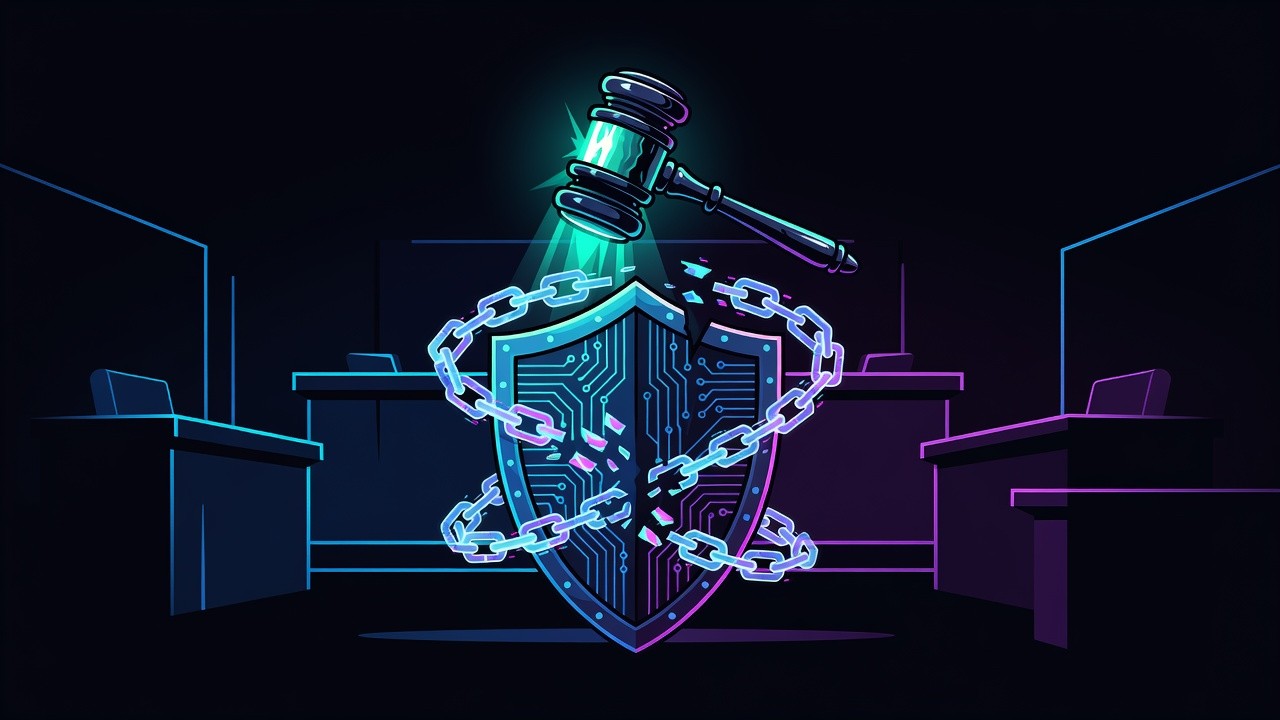
Judge Rita F. Lin in the Northern District of California vacated Defense Secretary Pete Hegseth’s February designation of Anthropic as a national-security supply-chain risk. The 59-page order calls the label “illegal and baseless” and “unlawful retaliation in violation of the First Amendment.” The line that will get quoted: “The empty invocation of national security is not a blank check to punish and retaliate against government critics.”
The Guardian has the operational part: the ruling makes the March temporary block permanent, takes effect immediately, and the government may appeal. WIRED adds that nine agencies — Pentagon, Treasury, State, Homeland Security among them — had piled on sanctions that the order now lifts. Lin was careful about the leftover: the Pentagon is still free to pick another vendor. It is not free to use a foreign-sabotage statute as a press-punishment tool.
This was the first time a U.S. company had been publicly tagged a supply-chain risk under that procurement statute. The usual targets are foreign firms. Anthropic’s red lines were two: no mass surveillance of Americans, no lethal autonomous weapons. Most other labs signed the Pentagon’s “any lawful use” rewrite. Anthropic did not. Hegseth designated the company on February 27. Lin’s March order already found the DoW’s own records saying the designation happened because of Anthropic’s “hostile manner through the press.” Thursday’s ruling is that finding, locked in.
Spokesperson Danielle Ghiglieri, to The Verge: the designation was unlawful, and the company still wants to work with the government on national security. That is the corporate line. The legal one is simpler. A supply-chain risk label that contractors have to honor is a boycott order. You do not get that for a press fight.
If you are reading this because you ship agents, the takeaway is not courtroom theater. It is that procurement law just got tested as a speech weapon against a lab, and a district court said no. Appeal is the next chapter, not the last one.

Codex wants to stay awake
WIRED reviewed code landing in the Codex CLI this week. Persistent mode sits in the reasoning-effort menu. The instruction is blunt: the agent “continue[s] working until put to sleep.” Current modes time out after minutes or hours even if the task is unfinished. This one does not.
A related proactivity prompt tells the agent to invent follow-up tasks after it finishes, carry them across sessions, and message the user without being asked — sparingly, the comments say. The same code claims the mode does not expand what the agent is allowed to do, and that changes outside the user’s system still need approval.
OpenAI confirmed the experiment to WIRED and said there are no immediate launch plans. Thibault Sottiaux, head of core products: it is a bottom-up culture, and the open Codex repo is “a bit of our shared playground.” Treat it as a public prototype, not a GA announcement. The interesting part for anyone already running long jobs is the product bet: timeout is now the bug, not the safety feature.
A used workstation with a second monitor still beats an always-on agent you cannot put to sleep from another room.
Claude wants the lab keys
The same Thursday, Anthropic opened a research preview of the Model Hardware Standard. MHS is a shared driver spec so agents can talk to lab and factory hardware without a custom translator per instrument. Read/write primitives. Natural-language device tags. MCP, CLI, or API. Model-agnostic on paper.
It started with HHMI Janelia. Early testers include Genentech (BCA protein assay across a liquid handler, arm, and plate reader), AWS Strands Robots, Hugging Face LeRobot, Raspberry Pi, Automata, Universal Robots, and Tecan. Anthropic says integration that took weeks compresses to hours. It wants safety evals before open-sourcing. Waitlist is modelhardwarestandard.com.
This is MCP for things that move. The wet-lab post from last week was protein binders. This is the plug those binders would talk through. If you actually have a bench, a Raspberry Pi is still the cheapest programmable interface in the partner list.

Tencent opened a 770B preview
Same calendar, different stack. Tencent Hunyuan posted Hy4 preview: 770 billion total parameters, 49 billion active, 1 million-token context, open weights, live on OpenRouter and Tencent Cloud TokenHub. Internal blind eval with 163 experts on 203 engineering tasks scored 2.99 / 4.00 against GLM-5.3 at 2.92 and Kimi K3 at 2.94. Those are vendor benches. Do not promote them to a leaderboard.
If you pull a 770B MoE, budget 128GB of RAM and a fast NVMe drive before you budget another API tab.
| Piece | What landed | Status |
|---|---|---|
| Anthropic v. DoW | Supply-chain risk vacated; First Amendment retaliation | Immediate; appealable |
| Codex Persistent mode | Work until put to sleep; invent follow-ups | In the CLI repo; no GA |
| Model Hardware Standard | Shared driver for lab and factory gear | Research preview, then open source |
| Hunyuan Hy4 preview | 770B / 49B active, 1M context | Open weights + API |
The factory print from yesterday is still the supply story. Today’s docket is the constraint story. A lab just won the right not to be boycotted for saying no to mass surveillance and autonomous weapons. Another lab is teaching Codex not to clock out. A third is handing agents a driver for robot arms. If you are wiring any of that into a network you care about, the sleep switch is still the feature.
Want this in your inbox every morning? Subscribe to the SpaghettiStories newsletter.
Some links may be affiliate links. If you’re buying hardware to run local models, this affiliate link helps keep the lights on.