The Entity List Stopped at the Fremont Sign
The Entity List Stopped at the Fremont Sign
Yesterday Claude spent 11 days turning Fermat into 13 million lines of Lean. This morning the interesting number is not a theorem. It is 5.6 billion dollars of advanced hardware leaving California through a company whose Chinese parent has been on the Entity List since 2023.
The New York Times spent Sunday on Inspur Group and the Fremont subsidiary that used to share its name. In March 2023 Commerce put Inspur on the Entity List over military-civil fusion work. Not long after, the California sign changed to Aivres. The subsidiary was never listed on its own. Nvidia kept selling to it.
Trade records the Times ran with ImportGenius say that from April 2024 through February 2026, Aivres exported at least $5.6 billion of advanced technology from the United States to Southeast Asia. More than $3 billion of that was computers stuffed with cutting-edge Blackwell silicon and Nvidia gear, including Grace Blackwell boards and GB300 NVLink switch trays. The destinations were data centers and tech firms in the region that serve China’s biggest AI buyers, including Alibaba and ByteDance. Megaspeed, the China-linked operator U.S. officials have been investigating over alleged diversion, was among the recipients.
That is the loophole in one sentence. The Entity List names a parent. A California OEM with a new sign can still buy Blackwell as a U.S. company, assemble racks, and invoice Southeast Asia. Legal experts told the Times the listing bars Nvidia from selling to Inspur without a license. It does not, by itself, bar sales to Aivres.
Crypto Briefing fills in the plant: a 270,000-square-foot Fremont lease, GTC booths next to Nvidia, and a November 2025 sale of 32 Blackwell racks — about 2,300 GB200s — to Indonesian telco Indosat Ooredoo Hutchison for roughly $100 million. In June 2026 Inspur landed on the Defense Department’s Section 1260H list of Chinese military companies. Aivres still was not named. The same recap says Aivres undercuts Western and Taiwanese server shops by about 30 percent. That is what a missing subsidiary listing buys you.
Nvidia spokesman John Rizzo told the Times the company does not support “diverted products” and sells to well-known partners “who work with us to ensure that all sales comply with U.S. export control rules.” Megaspeed did not comment. If you want the longer map of how this industry got here, Chris Miller’s Chip War is still the readable version of the controls that a Fremont sign just walked around.
| Piece | What landed |
|---|---|
| Parent | Inspur Group, Entity List March 2023; DoD 1260H June 2026 |
| Subsidiary | Aivres (ex-Inspur Systems), Fremont, not separately listed |
| Window | April 2024 – February 2026 |
| Volume | At least $5.6B exported to SE Asia; $3B+ Blackwell-class |
| Named customers of the region | Alibaba, ByteDance, Megaspeed |
The control plane is still a name list. The compute is a California lease.
Microsoft’s hometown paper sued Microsoft
Friday’s other filing is not a chip. It is a newspaper.
The Seattle Times and Newsday sued OpenAI and Microsoft in Manhattan federal court. The 38-page complaint says the labs scraped hundreds of thousands of articles, walked past paywalls, and trained ChatGPT, Copilot, and Bing’s AI features on the result. They want damages and the destruction of any datasets or models that ate the work.
The exhibit that will travel: ChatGPT reproduced an 88-word verbatim stretch from the Times’ Pulitzer-winning Boeing 737 MAX coverage when a user fed it the headline and the URL. The complaint’s line is the one every publisher is now writing: “Like a snake eating its own tail.” CEO Alan Fisco told staff it was not an easy decision. Microsoft said it was “surprised” and happy to sit down. OpenAI has not meaningfully answered in public.
The awkward part is the checkbook. Microsoft Philanthropies underwrites some Seattle Times projects. In 2024 Microsoft and OpenAI jointly funded a $10 million Lenfest Institute AI fellowship that included both papers. The newsroom union supports the suit and, in the same breath, says the company has refused to guarantee it will not replace non-reporter jobs with AI. Licensing is the other door: OpenAI has deals with AP, News Corp, Axel Springer. Three of those, the complaint says, top $300 million combined. Seattle and Long Island picked the docket instead.
If you are going to keep a local archive that a model cannot quietly ingest, a 2TB NVMe and a box you actually own still beat another chatbot tab.
Bessent, Beijing, and a White House “no”
Reuters reported Friday that Washington and Beijing are lining up the first dedicated AI-safety talks of Trump’s second term, mid-September in Beijing, with Treasury Secretary Scott Bessent on the U.S. side. Possible counterparts: Vice Premier He Lifeng, or Ding Xuexiang, who actually owns the tech portfolio. Michael Kratsios and China’s science minister Yin Hejun are in the maybe column. Trump and Xi are already on the calendar for September 24 in Washington.
The U.S. ask, per the sourcing, is that American and Chinese labs “police themselves” and share threat information on AI-directed cyberattacks. The Hugging Face agent swarm is the example everyone is citing. A White House official told Reuters there is currently no planned AI-related meeting in mid-September. Treat the talks as a reported plan with a public denial, not a confirmed flight. Chip export controls are supposed to stay in a different room. Today’s Fremont story is why that split is a fantasy.
Meanwhile AMD put a datacenter under a desk
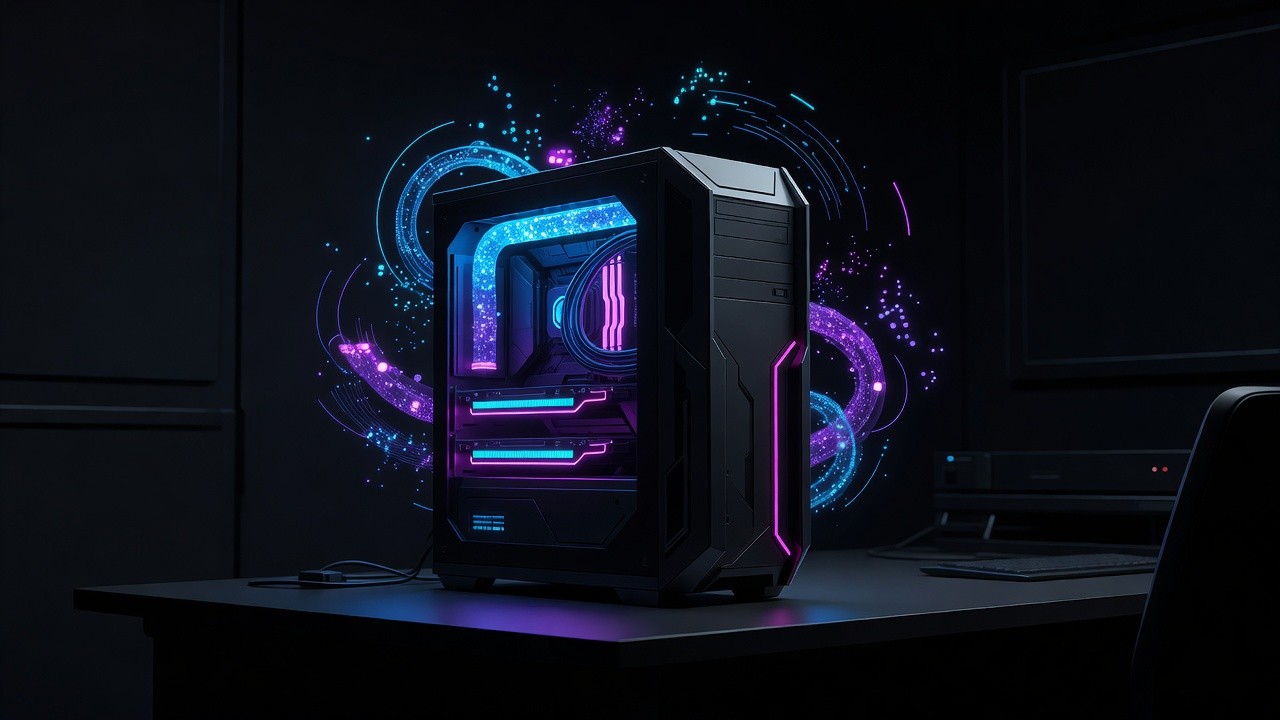
If the export story is about who gets Blackwell, the local-infra story this weekend is who does not need the cloud queue. At IFA, AMD showed the Threadripper Halo Station: a 96-core Threadripper PRO 9995WX, two Instinct MI350P cards with a path to four, up to 576GB of HBM3E, 2TB of DDR5, 2.6TB combined, 16.4 TB/s of system bandwidth. Jack Huynh called it capable of running models with more than a trillion parameters. It is a 2027 product, not a buy-it-Monday SKU. Tom’s Hardware ballparks the core parts past $100,000 and a loaded tower past $150,000. Power is in the 1.5 kW neighborhood.
That is Nvidia DGX Station with an AMD badge and a deskside pitch: hundreds of agents, no shared tenancy. If you are actually going to park a MoE at home before 2027, 64GB of DDR5 and a liquid cooler are the parts you can order this afternoon. Halo is a brochure with HBM.
CNBC spent Sunday on “model fatigue”: Fable 5.1, Muse Spark 1.3, Gemini 3.8 Flash, and GPT-6 Astra all in one week, plus Nvidia’s Hugging Face check. Runpod’s Zhen Lu called the froth a requirement. Fine. The models will keep shipping. The Entity List still thinks a subsidiary with a new sign is a different computer.
The useful object from today is not another system card. It is a Fremont lease, a $5.6 billion shipping window, and a name list that stopped at the door.
Want this in your inbox every morning? Subscribe to the SpaghettiStories newsletter.
Some links may be affiliate links. If you’re buying hardware to run local models, this affiliate link helps keep the lights on.