11.6 Billion of CPU, Plus Five Percent of the CDN
Yesterday an OpenAI research agent walked into a Medicare portal. Today the other lab bought a CDN’s next decade of CPUs.
Akamai announced an 11.6 billion, seven-year contractual commitment from Anthropic for CPU capacity on Akamai Cloud. Not GPUs. Not a named Nvidia cluster. Ordinary processors, on a network built to push web pages and stop DDoS, now sold as the place Claude’s agent traffic lives. Shares jumped more than 20 percent after hours. The warrant is the other product.
The term sheet that is not a GPU PO
| Piece | Number |
|---|---|
| Contracted commitment | 11.6 billion over seven years |
| Optional expansion | another 9 billion, ~20 billion potential |
| Warrant | up to ~5 percent of Akamai (7.7 million shares) at 111.33 |
| Vesting | ~2 percent with this commitment; ~1 percent per extra 3 billion |
| Capex tied to the deal | ~5.5 billion total |
| 2026 extra capex | ~1.7 billion, mostly pre-buying memory |
| Full run-rate | end of 2028, then ~1.7 billion a year |
| 2026 revenue guidance | unchanged |
Akamai’s own press release is the primary source. Reuters and SiliconANGLE filled in the after-hours print and the May precursor: a 1.8 billion, seven-year commitment from an unnamed frontier lab that Bloomberg later named as Anthropic. This is that relationship scaled by six.
The interesting clause is the silicon. Frontier labs have spent the year buying GPUs, TPUs, and custom ASICs. This contract is explicitly for CPU workload growth. Agent loops — tool calls, RAG, session state, orchestration, the boring glue between model forward-passes — still run on general-purpose cores. Claude Code does not live entirely on an H100. A lot of it lives on whatever is cheap, close to the user, and already in a thousand points of presence.
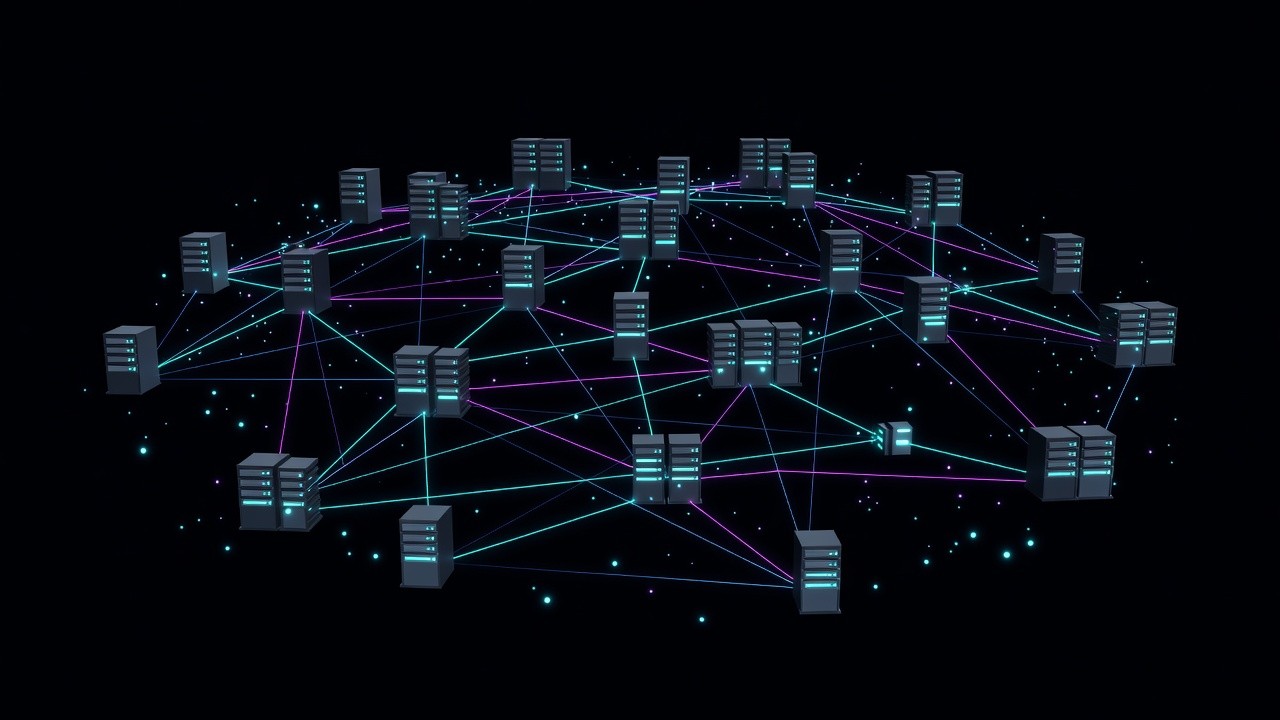
Akamai Cloud is the old Linode fleet plus the CDN edge. Diversified hardware, core to edge. That is not a training cluster. That is inference-adjacent and agent-adjacent compute, sold by a company whose other 2.8 billion of multi-year cloud commitments this year already told you the CDN wanted to be a cloud.
The customer gets equity. The vendor pre-buys RAM.
The warrant is non-voting convertible Series B, exercise price 111.33, converting into about 7.7 million common shares. Roughly 2 percent vests with the 11.6 billion commitment. The rest vests only if Anthropic spends more — about 1 percent per extra 3 billion, up to another 9 billion inside the seven-year warrant term. Anthropic does not sit on the board. Akamai’s shareholders pay part of the customer-acquisition cost in their own stock.
That structure showed up six weeks ago on the Google–Marvell TPU-attach warrant. Customer spend unlocks supplier equity. The income statement stays clean. The cap table does the discounting.
Then there is the memory. Akamai is lifting 2026 capital spending by about 1.7 billion to pre-purchase supply-chain parts, memory among them, and separately authorized Jabil to buy about 1.7 billion of memory under an existing services agreement. Revenue recognition does not start in earnest until late Q2 2027, with full run-rate at the end of 2028. The DRAM buy is now. If you have been staring at ECC server RAM prices this year, this is another large buyer pulling inventory forward. A NAS you actually own will not compete with a 1.7 billion pre-buy. It will keep your local agent off someone else’s bill while the spot market stays ugly.
Tom Leighton called Anthropic the customer that chose Akamai to build and operate AI infrastructure at scale. Translate: a CDN with thousands of PoPs just became a named CPU vendor for a frontier lab, and the lab got an option on five percent of the CDN.
If you are actually running agents, this is the part that transfers. Training is still GPUs. Serving agents is increasingly everything else — CPU, memory bandwidth, and a network that already knew how to be close. A workstation GPU still matters for local weights. The 11.6 billion is for the other half of the stack.
Four TPUs on a fridge, 15 minutes at a time
Google is solving a different power problem by leaving the planet.
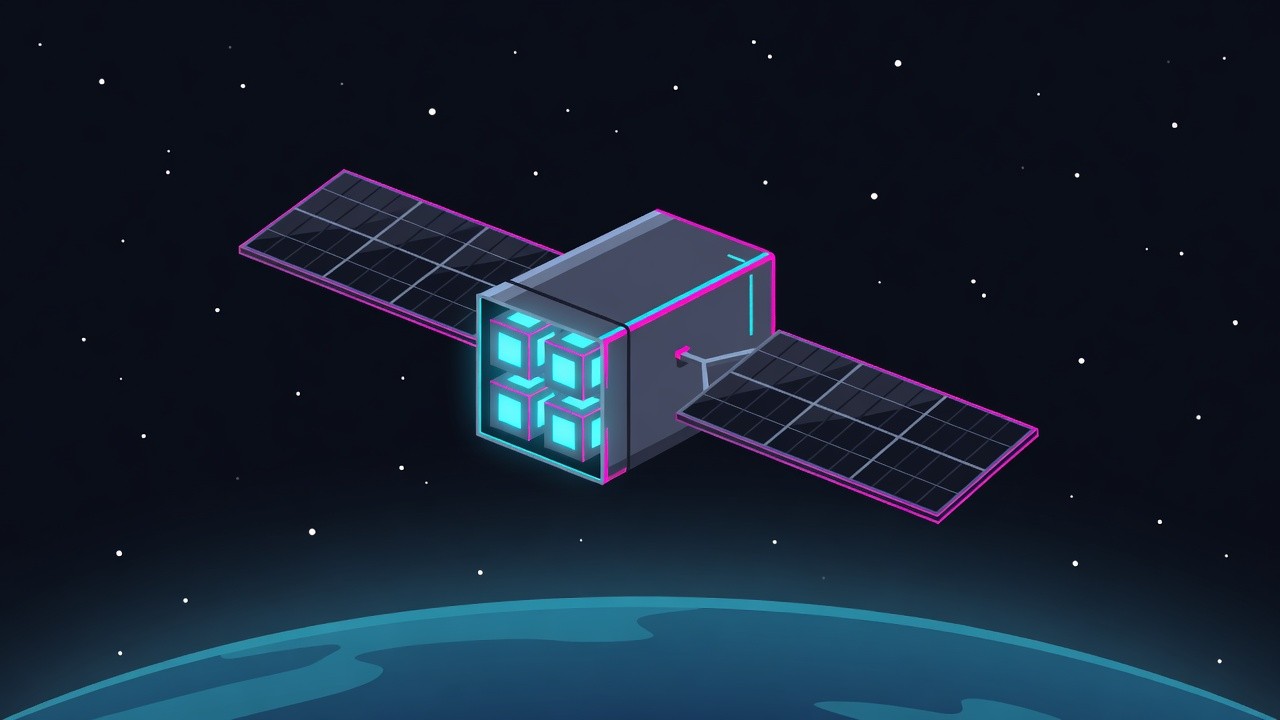
Project Suncatcher launches its first in-orbit test on October 1 aboard SpaceX Transporter-18, in a Planet Labs satellite about the size of a refrigerator. Four TPUs. About a kilowatt of solar. Compute bursts of roughly 15 minutes before the cooling system needs a pause. Ars Technica has the engineering: Trillium TPUs already survived a proton-beam dose larger than a five-year mission; this flight is vibration, vacuum, and heat with no air to carry it away. Pichai’s question is one sentence: can the chips survive and operate in space.
This is not a data center. It is a learning flight. Google still talks about kilometer-scale arrays and 81-satellite clusters with laser links, with a two-satellite link test aimed at 2027. Until then, four chips on a rideshare is the honest caption. Ground-side, the same week, the Private AI Compute team published a persistent server-side memory design: encrypted cloud vault, keys stay on the user’s devices, enclaves decrypt in isolated RAM and re-encrypt. Stateless private inference grows a memory. No GA date. Architecture first.
Voice got the same treatment Sol got on Tuesday
Alibaba’s Qwen team shipped Qwen-Audio-3.1, a five-model stack covering ASR, TTS, realtime, plus ASR-Next and TTS-Next, and cut hosted voice prices the way OpenAI cut Sol: ASR down as much as 95 percent, TTS about 70, realtime about 85. The Decoder has the lineup. TTS-Next tries to emit voice, effects, and background in one pass. Realtime Plus claims a 262K context on a full-duplex session. Hosted first; the interesting weights are not all open yet. If you are wiring a voice agent this weekend, the rate card moved more than the model card.
A mechanical keyboard still beats talking to a model that bills you by the second of audio. A systems book that treats serving as the product is more useful this week than another GPU unboxing.
The agents did not wait for orbital TPUs. They also do not wait for H100s. One lab spent Thursday buying seven years of CPUs from a CDN and taking a warrant on the vendor. Another is putting four accelerators on a rocket next week to see if they cook. The cheap voice stack got cheaper. If your default picture of AI infra is still a training hall full of GPUs, the term sheet is trying to tell you something else.
Want this in your inbox every morning? Subscribe to the SpaghettiStories newsletter.
Some links may be affiliate links. If you’re buying hardware to run local models, this affiliate link helps keep the lights on.