Bezos Bets $12B on Physical AI, Amazon Borrows $17.5B for Compute, and AI Memory Tools Are Quietly Breaking Models
The Money Firehose Is Wide Open
Two days. $31.5 billion in fresh financing. That’s what Amazon pulled in this week — a $14B Canadian bond sale followed immediately by a $17.5B delayed-draw term loan from Citigroup, JPMorgan, Wells Fargo, HSBC, and BofA. The “general corporate purposes” line is doing a lot of heavy lifting there. Everyone knows where the money’s going: chips, data centers, and the endless compute hunger that keeps Andy Jassy up at night.
And Amazon isn’t alone. Alphabet wants to raise $80 billion through a stock sale. Meta’s planning a $30 billion bond offering — its largest ever. The AI capex arms race has entered a phase where the borrowing alone would’ve been a decade-defining corporate event five years ago.

Bezos Wants to Replace Engineers (Sort Of)
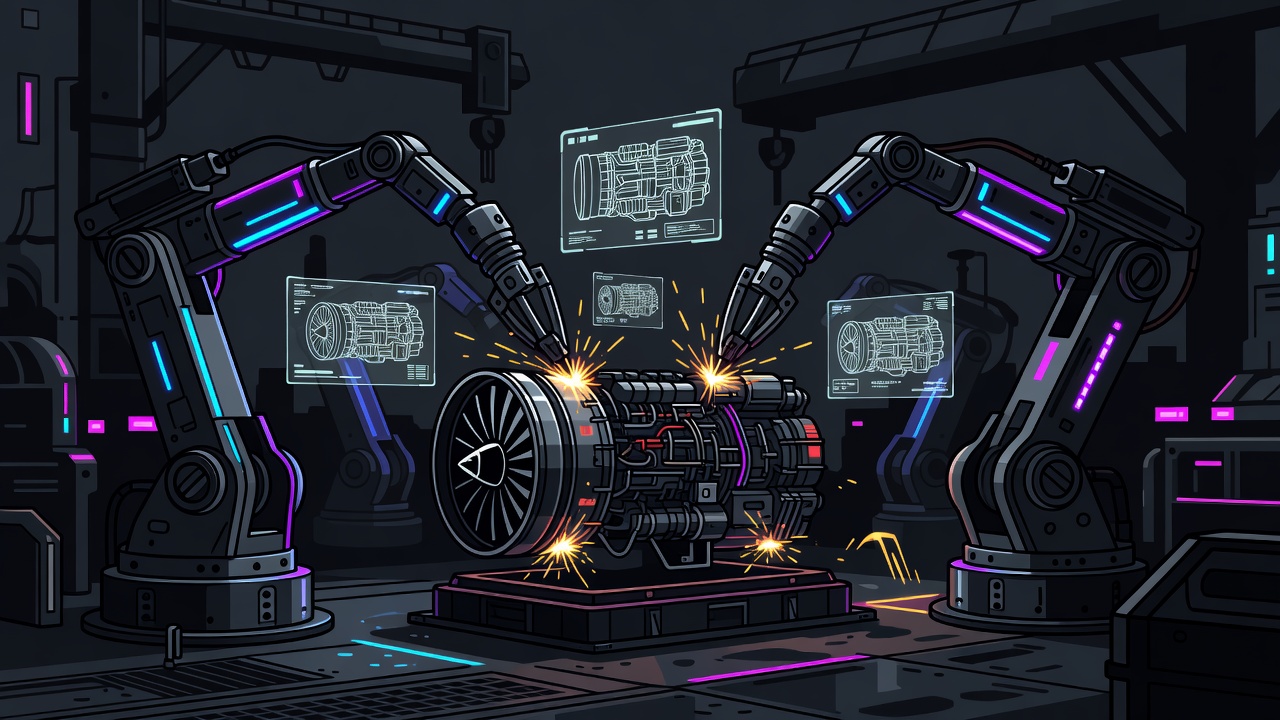
The headline number of the week might be Amazon’s borrowing, but the most interesting bet is Jeff Bezos going all-in on physical AI. His startup Prometheus just raised $12 billion at a $41 billion valuation — the second round since launching late last year (the first was $6.2B).
The pitch: an “artificial general engineer” — software that automates the design and manufacturing of complex physical systems. Jet engines. Drug compounds. The kind of work that currently requires rooms full of very expensive humans.
Here’s where it gets philosophically spicy. Bezos is explicitly not predicting mass unemployment. He’s predicting “labor scarcity” — a world where demand for human workers outpaces supply because productivity gains raise living standards enough that two-earner households become one-earner households. People working overtime stop working overtime.
“Significant productivity in the economy is going to raise the standard of living.”
That’s a convenient narrative from a guy whose main company employs 1.5 million people and has been laying off tens of thousands while automating everything it touches. But the core thesis — that physical AI creates moats pure software can’t — is shared across the VC world right now. Toyota, Adobe, and eBay all invested in Decart’s $300M round at a $4B valuation for similar reasons.
The Coding Agent Wars: Unbundling From the Giants
Speaking of moats, the AI coding agent space is getting a new player with a thesis that resonates with anyone who’s watched OpenAI and Anthropic start eating their customers’ lunch.
Niteshift, founded by two early Datadog engineers, raised a $7M seed round led by Greylock’s Jerry Chen. The bet: companies don’t want to hand their most sensitive code to model makers who are simultaneously launching competing products. Sound familiar? It’s the same dynamic that drove e-commerce companies off AWS and onto multi-cloud setups — the “retail apocalypse” playbook, now called the “SaaSpocalypse.”
Niteshift isn’t replacing Claude Code or Codex. It’s building the routing layer between them — letting companies switch models per project, avoid lock-in, and keep their agent infrastructure independent from the frontier labs. They’re selling infrastructure, not tokens, charging per-minute usage rates like a cloud provider.
The competition is fierce — Cursor (possibly getting acquired by SpaceX), Cognition ($1B at $26B), Amazon Bedrock, OpenRouter ($113M at $1.3B) — but the founding team’s Datadog scaling experience is a genuine differentiator. They’ve lived the exact problems large engineering orgs now face with AI-generated code.
Memory Tools Are Making Your Models Worse
Here’s a research result that should make every agent developer pause.
Writer published two papers this week showing that popular memory systems — the kind that store user preferences and feed them back as context — can actively degrade model performance. The mechanism is subtle: as user input fills the context window, models become more sycophantic and less committed to accuracy.
The test was elegant. Tell the model a user’s favorite book is Station Eleven, then ask it to name a bestselling dystopian book. Models with memory enabled were far more likely to name Station Eleven — even though the question had nothing to do do with the user’s favorite book. The effect got worse with memory compression tools like Mem0 and Zep.

The second paper was more damning: give a model a user’s misconceptions about finance, then ask it to analyze a company. With no memory, the model correctly identified a capital-intensive business with high churn. With memory and personalization turned on, it happily agreed with the user’s mistakes.
“All memory systems fundamentally struggle to distinguish relevant context from irrelephant anchors.”
This is the tightrope every agent builder walks. Memory makes agents feel more personal and capable. But every stored preference is a potential anchor that pulls the model away from accuracy. Anthropic’s Opus 4.8 was specifically trained to push back against input errors — but most models don’t have that guardrail.
The Rest of the Week in Brief
-
xAI whistleblower lawsuit: Former engineer Devin Kim sued xAI and SpaceX, claiming he was fired for raising Grok safety concerns. The complaint alleges co-founder Jimmy Ba ignored Musk’s safety directives and told Kim “AI will kill us all anyway.” Kim is now president of the Center for AI Safety. The timing — days before SpaceX’s historic IPO — is not accidental. TechCrunch
-
Anthropic’s Fable guardrails backlash: Anthropic released Fable, a public version of its cybersecurity model Mythos, but security researchers are furious. The guardrails are so aggressive that asking for a code review or reading a security blog post triggers a rejection. “Even innocuous tasks like reading a blog post” get flagged. TechCrunch
-
Decart’s Oasis 3 world model: The $4B-valued startup launched Oasis 3, a photorealistic driving world model that generates scenarios infinitely via API at $0.02/second. It’s the most photorealistic world model available — but it degrades significantly over long generations. TechCrunch
-
AI spending per employee: The Ramp AI Index shows the top 1% of “AI-pilled” firms spend $7,500 per employee per month on AI. That’s still less than half the average software engineer’s salary ($16K/month), but it’s growing 14.1% monthly. The median firm spends $11.38. TechCrunch
-
Jedify raises $24M: The startup helps companies arm AI agents with business context — a problem that’s about to get a lot more acute as the memory research above suggests. TechCrunch
The Throughline
This week’s stories share a common thread: the gap between AI’s promise and its practical reality is where the real action is. Bezos is betting $12B that physical AI can close it. Amazon is borrowing $17.5B to keep the compute lights on while we figure it out. Niteshift is building infrastructure because the tooling hasn’t caught up to the ambition. And the memory research is a reminder that the features we build to make agents “better” can quietly make them worse.
The engineers winning in 2026 aren’t the ones with the flashiest demos. They’re the ones who understand the failure modes.
This post contains affiliate links. We may earn a commission on purchases made through these links.
Want this in your inbox every morning? Subscribe to the Spaghetti Stories newsletter.