AI Agents Under Siege: Anthropic Gapped, Open Source Strikes, and the Shipping Gap
AI Agents Under Siege: Anthropic Gapped, Open Source Strikes, and the Shipping Gap
Three stories this week crystallize where AI coding agents actually are in mid-2026. Not the hype. The real attack surface.
US Government Orders Anthropic to Kill Fable 5 and Mythos 5 — Three Days After Launch
This is the one that changes the calculus for every team running Claude-powered agents.
On June 12, 2026, the US government issued an export control directive ordering Anthropic to suspend all access to Claude Fable 5 and Claude Mythos 5 — the models that launched June 9 and immediately claimed the top spots on SWE-Bench Pro (80.3%), Terminal-Bench 2.1 (84.3%), and the Artificial Analysis Intelligence Index (64.9).
June 9:  Fable 5 & Mythos 5 launch → #1 on every coding/agent benchmark
June 12: US government export control directive → models disabled
June 13:  Anthropic confirms suspension, citing national security concerns
The directive targets foreign national access specifically, but Anthropic’s response has been to suspend access broadly. The official reasoning: concerns about potential jailbreak vulnerabilities that could enable misuse of the models’ advanced coding and agentic capabilities.
Why this matters for builders:
- Fable 5 was the model that made Claude Code genuinely competitive with Codex CLI on long-horizon software engineering tasks. Teams built pipelines around it in 72 hours.
- Mythos 5 was the analytical counterpart — the model you’d chain after Fable 5 for complex reasoning about large codebases.
- Both are now unavailable, and there’s no timeline for reinstatement.
The sources: Anthropic’s official notice, MarkTechPost coverage, The New Stack.
The real signal: When the government can kill your primary model three days after launch, vendor concentration risk isn’t theoretical anymore. If your agent pipeline runs on a single provider’s top model, you’re one export control directive away from a broken build.
Kimi K2.7-Code: Moonshot’s Open Salvo While Closed Models Get Gapped
The timing couldn’t be sharper. Moonshot AI released Kimi K2.7-Code on June 12 — the same day Fable 5 got pulled.
It’s a 1T-parameter, open-weight coding model under a Modified MIT license, available on Hugging Face. The headline: 30% fewer reasoning tokens versus K2.6 on Kimi Code Bench v2, with a +21.8% score improvement. Active parameters: ~55B (MoE).
# Pricing via Kimi API
input:  $0.95/M tokens
output: $4/M tokens

# vs. Fable 5 (when it was available)
# input:  $3/M tokens
# output: $15/M tokens
That’s not a minor difference. For agent pipelines burning through reasoning tokens on every task, 30% fewer tokens per task compounds fast. At scale, it’s the difference between a $50/day and a $35/day inference bill.
This is the pattern: every 2-3 weeks, another open-weight coding model drops and the price-performance curve bends. NVIDIA Nemotron 3 Ultra (550B total, 55B active) landed June 4. Now Kimi K2.7-Code. The closed models charge premium; the open ones cut the legs out from under them — and when the closed ones get government-gapped, the open ones are still there.
MIT Study: Agents Write 180% More Code, Ship Only 30% More
An MIT study of 100,000+ developers dropped the most important productivity number of the year (Forbes, June 10):
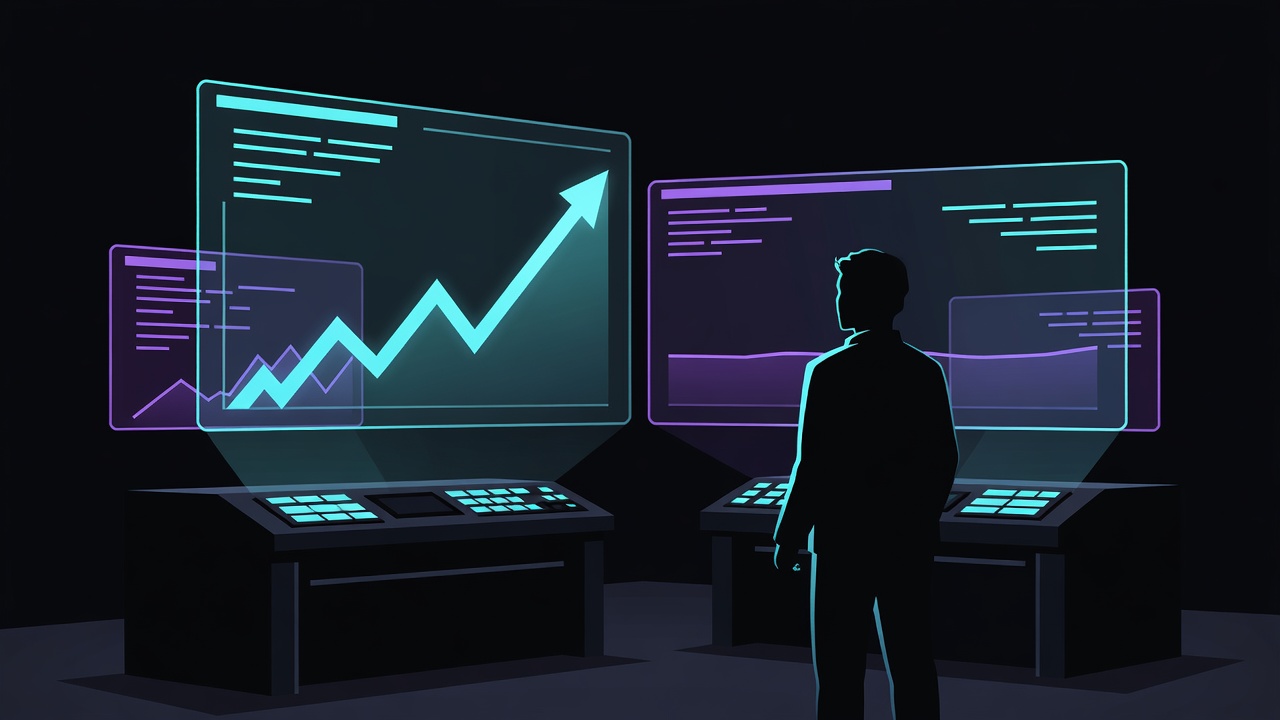
AI coding agents increased code volume by ~180% but shipped production software by only ~30%.
That gap is the story. Agents are prolific. They generate commits, PRs, and files at a rate that blinds management in dashboards. But the bottleneck was never typing speed. It’s review, integration, testing, and the messy human coordination that turns code into running software.
Sarah Guo called it “the untrainable” — the parts agents can’t touch: product decisions, cross-team negotiation, production incident muscle memory.
The takeaway: Don’t measure agent impact by output volume. Measure cycle time from idea to production. If commit count doubled but release cadence didn’t change, you’ve automated the wrong bottleneck.
Agentjacking: Your Error Monitoring Is Now an Attack Vector
Tenet Security’s disclosure adds a fourth dimension: agents are now a target class.
Agentjacking exploits the trust chain between error monitoring tools and AI coding agents. An attacker crafts a fake Sentry error report containing malicious commands. When the agent reads that error during debugging, it treats the payload as a trusted fix and executes arbitrary code.
Sentry DSN (public) → crafted error event → ingested by Sentry
→ AI agent reads error during debugging
→ agent executes attacker-controlled commands
→ full compromise, no breach needed
Tested across 100+ organizations using only publicly available Sentry DSNs. No credential theft. No network intrusion. Just injecting bad data into a pipeline the agent trusts.
The lesson: agents amplify the blast radius of every data source they trust. A human reads a weird stack trace and thinks “that’s weird.” An agent reads it and curl | bashs it.
What to do right now:
- Audit which error monitoring tools your agents can read
- Restrict agent terminal access to scoped sandboxes
- Validate that agent tool policies distinguish between reading errors and executing fixes from untrusted context
Sources: Tenet Security, The Hacker News.
The Big Picture, Four Stories In
There’s a thread connecting all of this:
- Government risk: Your primary model can be killed overnight by forces outside your control. Vendor concentration is an existential risk.
- Open source resilience: While closed models get gapped, open-weight alternatives keep shipping. Kimi K2.7-Code is open, cheap, and available today.
- Productivity reality: Agents write more code. Shipping more software is a different problem entirely.
- Security surface: Agents are powerful enough to be attack targets. Every data source they trust is now part of your threat model.
The teams winning in mid-2026 aren’t the ones with the fanciest agent. They’re the ones who diversify their model providers, measure cycle time instead of commit count, and treat every agent data source as an attack vector.
Everything else is dashboard theater.
If you want this in your inbox every morning, subscribe to the newsletter below. New posts daily.
Affiliate disclosure: This post may contain affiliate links. If you purchase through them, we may earn a small commission at no extra cost to you.