The Government-Gated AI Era: GPT-5.6, Mythos 5, and $576B in Chips

Two weeks ago, the best AI models on Earth disappeared behind government paperwork. Now they’re coming back — but not for you.
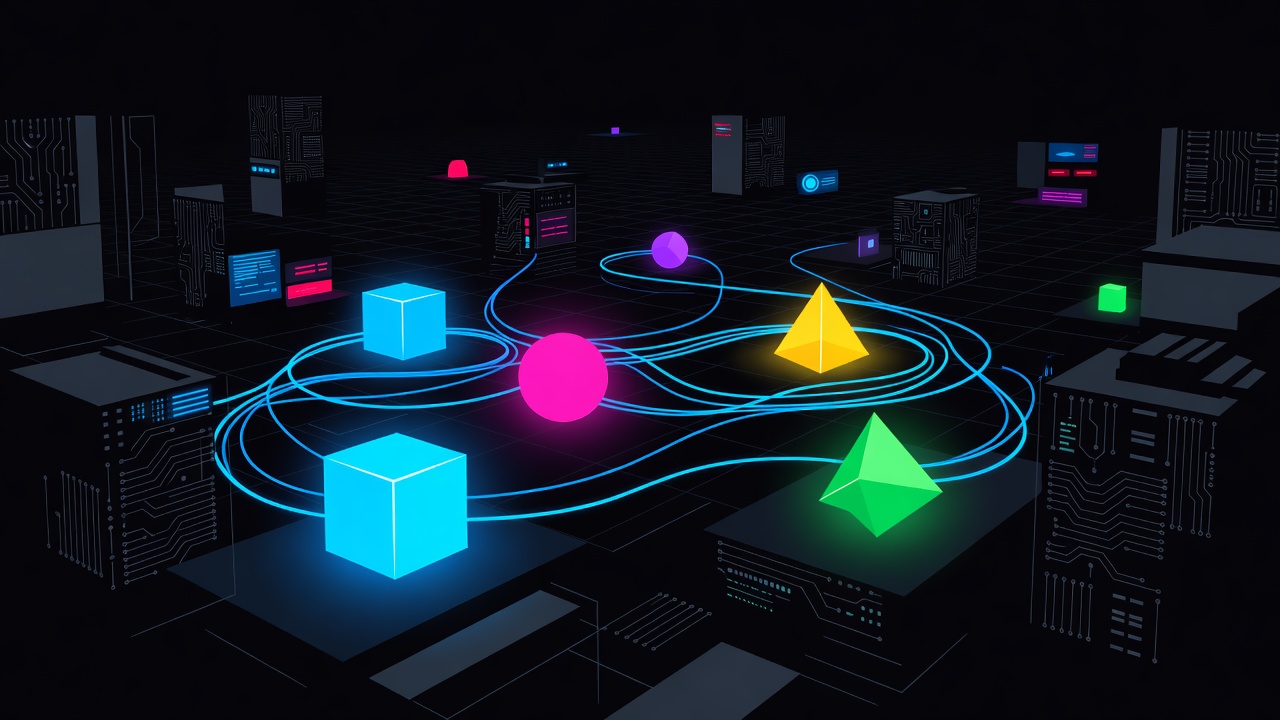
GPT-5.6 Sol, Terra, and Luna dropped as limited previews on June 26, and on the same day, Anthropic’s Mythos 5 got a partial reprieve from Washington. Neither model is publicly available. Both follow the new rules of the game: pre-launch government vetting, staged rollouts, vetted-only access.
The Trump administration’s June 2 executive order established the playbook — companies provide federal government up to 30 days early access to frontier models for national security review. Then they can release to “trusted partners.” Then maybe, eventually, everyone else.
GPT-5.6: Three Tiers, Government Gate
OpenAI’s GPT-5.6 series is the most significant architecture change since GPT-5, and you can’t use it yet.
The tier structure:
- Sol ($5 in / $30 out per M tokens) — flagship for hard coding, agentic security, long-horizon planning. Sol Ultra hit 91.9% on Terminal-Bench 2.1. That’s the new SOTA for agentic command-line engineering.
- Terra ($2.50 / $15) — GPT-5.5-competitive at roughly half the cost, targeting Claude Sonnet and Gemini Flash tiers.
- Luna ($1 / $6) — fast, affordable, aimed at DeepSeek Flash and Gemini Flash Lite territory.
All tiers crossed OpenAI’s “High” cyber threshold on ExploitBench (Sol at 96.7%). And Sol code mode became the first model to cross 50% on Agent’s Last Exam at 50.9%.
Access is limited to roughly 20 vetted partner organizations via API and Codex. OpenAI says it “believes in broad access” and opposes making government-gated launches permanent. They expect general access “in the coming weeks.”
Previewing GPT-5.6 Sol — OpenAI
Mythos 5 Partially Restored
Anthropic fought the administration for months and limped out with a partial win.
On June 27, Commerce Secretary Howard Lutnick notified Anthropic that Mythos 5 could be released to roughly 100 trusted companies and federal agencies — specifically those defending critical infrastructure in energy, finance, healthcare, and telecom.
Fable 5 remains fully banned. All civil and criminal penalties of the original export control directive are still in force. The next milestones are July 8 (ID verification privacy policy) and August 1 (60-day executive order deadline).
The timeline tells the story:
- Feb 2026: DOD demands Claude support lethal autonomous weapons and mass domestic surveillance. Anthropic refuses.
- Feb 27: Trump orders all federal agencies to stop using Anthropic.
- March 5: DOD designates Anthropic a supply chain risk — the label historically reserved for foreign adversaries.
- March 9: Anthropic sues, alleging First Amendment retaliation.
- Ongoing: Defense contractors still must certify they don’t use Claude for military work.
CNBC: US allows Anthropic to release Mythos to some companies
Notably, Tom Brown (co-founder) replaced Dario Amodei in negotiations with the administration. And Claude downloads actually surged during the ban talk — temporarily surpassing ChatGPT and Gemini in app stores. Scarity sells.
The New Pattern
We’re watching a new release pattern crystallize:
- Build frontier model
- Give federal government early previews for security review
- Release to vetted enterprise partners
- Maybe open it up later if Washington approves
This is the government-gated AI era. OpenAI played along — previewing GPT-5.6 with the government from day one. Anthropic resisted, got kneecapped, and is now crawling back through the side door labeled “critical infrastructure only.”
Read more: White House AI executive order
$576 Billion Says South Korea Doesn’t Care About Your Politics
While Washington argues over who gets to read which model card, South Korea just announced $576 billion in semiconductor and AI investments.
President Lee Jae Myung unveiled the plan today: a “triple axis” of semiconductors, physical AI, and data centers.
The breakdown:
- Samsung + SK Hynix: 800 trillion won ($518B) for two new chip fabs each in the southwest region
- AI data centers: 550 trillion won by 2029; 1,000+ trillion won by 2035
- DRAM doubling within five years by advancing Seoul-area fabs to mid-2030s
- Plus a robotics and parts cluster in Saemangeum for humanoid competition with Hyundai
Samsung chairman Jay Y. Lee selected Gwangju as the site for one new cluster. SK Hynix chairman Chey Tae-won was more cautious — noting it took nine years to build the existing Yongin cluster, and fabs require “massive land, power, water and talent.”
Market reaction was telling: Samsung dropped 4.86%, SK Hynix fell 1.68%. Investors looked at $576 billion in spending and saw oversupply risk and 20-year demand uncertainty.
Reuters: Korea taps Samsung, SK Hynix in $576B AI-chip drive
AI Engineer World’s Fair Kicks Off Today
In non-hardware news, the AI Engineer World’s Fair 2026 starts today in San Francisco — 29 tracks, 300+ speakers, 100 expo partners, 6,000+ engineers at Moscone Center.
If you’re in SF this week, that’s where the production-AI practitioners are gathering. The agentic coding track alone has a half-day workshop on multi-agent orchestration patterns that actually ship.
The Bottom Line
June 2026 ends with two tiers of AI access: those who get the good models through government relationships, and everyone else waiting in line. OpenAI navigated it smoothly. Anthropic nearly broke on it. And South Korea is spending like it intends to make all the silicon that runs these restricted models regardless of who Washington lets touch the weights.
The frontier isn’t just gated by capability anymore — it’s gated by export control letters and Commerce Department approvals.
Affiliate links in this post support SpaghettiStories. See our disclosure.
Get this in your inbox every morning — subscribe to SpaghettiStories.