Heltec V4 Meshtastic Public Reference Guide (USA 2026)
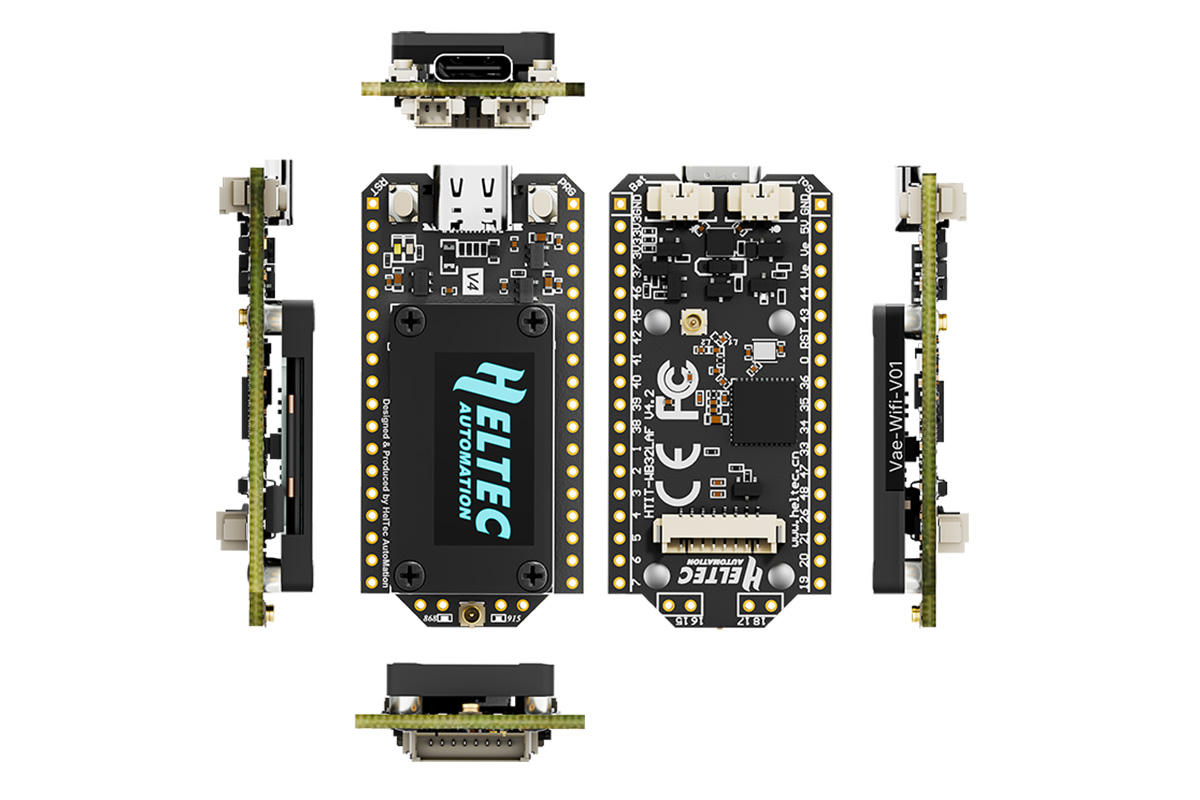
Heltec V4 Meshtastic Guide: Build High-Power USA LoRa Nodes That Actually Perform in 2026
The Heltec WiFi LoRa 32 V4 (often called Heltec V4) isn’t just another ESP32 board with a LoRa chip. It’s the device that finally gives serious US Meshtastic builders the power, memory, and solar-ready features they’ve been waiting for — all while staying well under FCC Part 15.247 limits (30 dBm conducted power / 36 dBm EIRP with 6 dBi antennas) on the 902–928 MHz band.
If you’ve been running V3 nodes and wondering why your range feels capped, or you’re building your first mesh from scratch, this guide gives you everything you need: official specs that actually matter, verified purchase links, the exact firmware settings for legal US operation, real community builds that work, and the best events to plug into the growing network.
Why the Heltec V4 Changes the Game for American Meshtastic Users
Most LoRa boards sold in the US are either under-powered or require awkward hacks to hit decent range. The Heltec V4 solves both problems out of the box.
It ships with a Semtech SX1262 + external power amplifier (GC1109 or KCT8103L) that delivers a clean 28 dBm output. That’s close enough to the legal 36 dBm EIRP ceiling (30 dBm conducted + 6 dBi) that you’ll see real-world gains — especially when paired with a good 915 MHz external antenna. Community range tests consistently show the V4 punching farther than V3 nodes on the same preset and location.
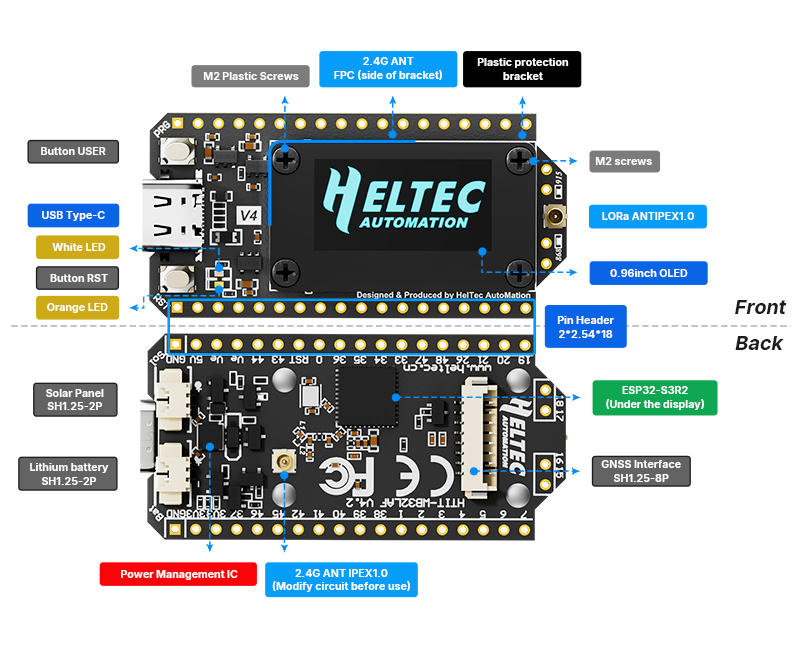
Add in 2 MB of PSRAM, a proper solar input header, optional Quectel L76K GNSS, and an on-board 0.96” OLED that’s actually readable outdoors, and you have a node that can serve as a portable go-bag unit, a rooftop repeater, or a GPS beacon without compromise.
Firmware requirement: Meshtastic v2.7.20 or newer. Anything older won’t fully support the V4’s hardware (especially v4.3 boards). Always use the official web flasher at flasher.meshtastic.org and select the Heltec V4 target.
Official Specs That Actually Matter (USA 902–928 MHz Edition)
Here’s the condensed version of the official Heltec datasheet and wiki, filtered for what US builders care about:
| Feature | Heltec V4 Reality Check | Why It Matters for Your Mesh |
|---|---|---|
| TX Power | 28 ± 1 dBm (high-power 902–928 MHz version) | Approaches legal max; noticeable range improvement over V3 |
| LoRa Chip + PA | SX1262 + external GC1109/KCT8103L | Better efficiency and output than older boards |
| RX Sensitivity | –137 dBm (SF12 / 125 kHz) | Excellent for weak-signal links in rural or obstructed areas |
| Memory | 2 MB PSRAM + 16 MB Flash | Smooth UI, complex maps, and future Meshtastic features |
| Power Options | USB-C, 3.3–4.4 V Li-ion, 4.7–6 V solar input | Perfect for 18650 + small panel repeaters |
| Display | Protected 0.96” OLED | On-device status without pulling out your phone |
| GNSS / Extras | 1.25-8P header for Quectel L76K + accelerometer | Easy position-aware nodes or trackers |
| Size / Weight | 51.7 × 25.4 × 10.7 mm, ~35 g | Fits in compact 3D-printed cases or existing V3 enclosures |
Critical USA buying tip: Make sure you order the 902–928 MHz high-power variant. Some early stock was 863–870 MHz only. Available from Rokland, Amazon single, or Amazon 2-pack kit.
Regulatory note: Set your region to US in Meshtastic. This enforces legal frequency hopping and keeps you under FCC limits per Part 15.247 (30 dBm conducted; EIRP up to 36 dBm with ≤6 dBi antennas). The V4’s 28 dBm hardware output gives you headroom even with a modest-gain antenna. FCC 15.247
How to Get Started (Flashing in Under 10 Minutes)
- Attach the LoRa antenna (915 MHz, IPEX connector) before connecting USB/power. Transmitting without an antenna will damage the TX power amplifier (PA).
- Go to flasher.meshtastic.org
- Select Heltec V4 from the device list
- Choose the latest stable firmware (≥2.7.20)
- Full erase recommended on first flash
- Connect via USB-C, hit “Flash,” and wait for the progress bar
Note: For more details, see the Heltec V4 hardware docs.
Once flashed, set:
- Region: US
- Preset: LongFast (best balance for most US meshes)
- Max Power: 30 dBm (the device will cap at ~28 dBm hardware limit)
- Frequency Slot: Leave at default or coordinate with your local mesh
Pro move: If you’re building a solar repeater, enable the solar input in the power settings and pair it with the official Heltec expansion housing (includes 2800 mAh 18650 bay and solar connector).
Community Builds That Actually Work in 2026
The Heltec V4 has exploded in popularity. Here are the projects real users are shipping right now:
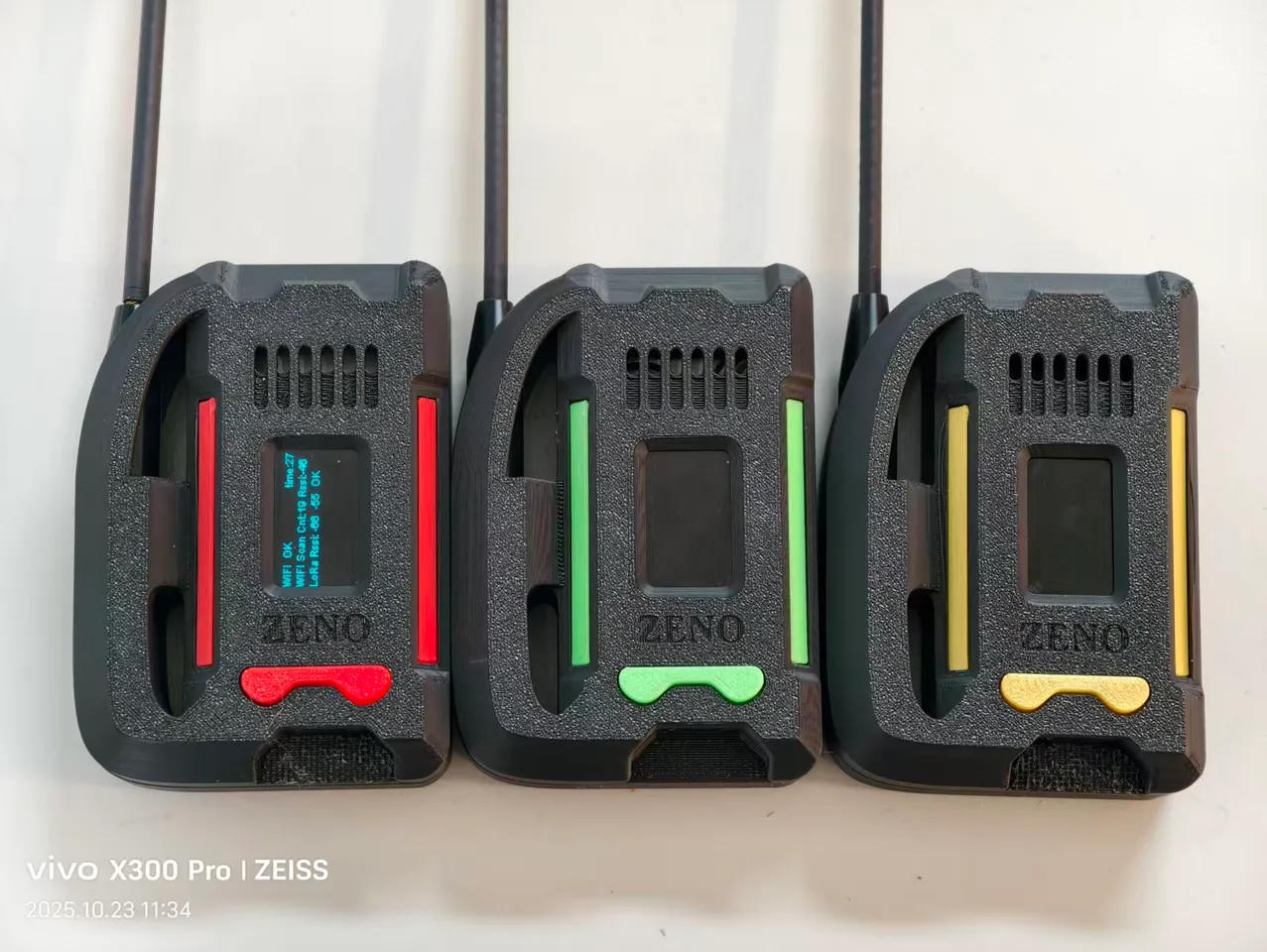
3D-Printed Cases (All Free)
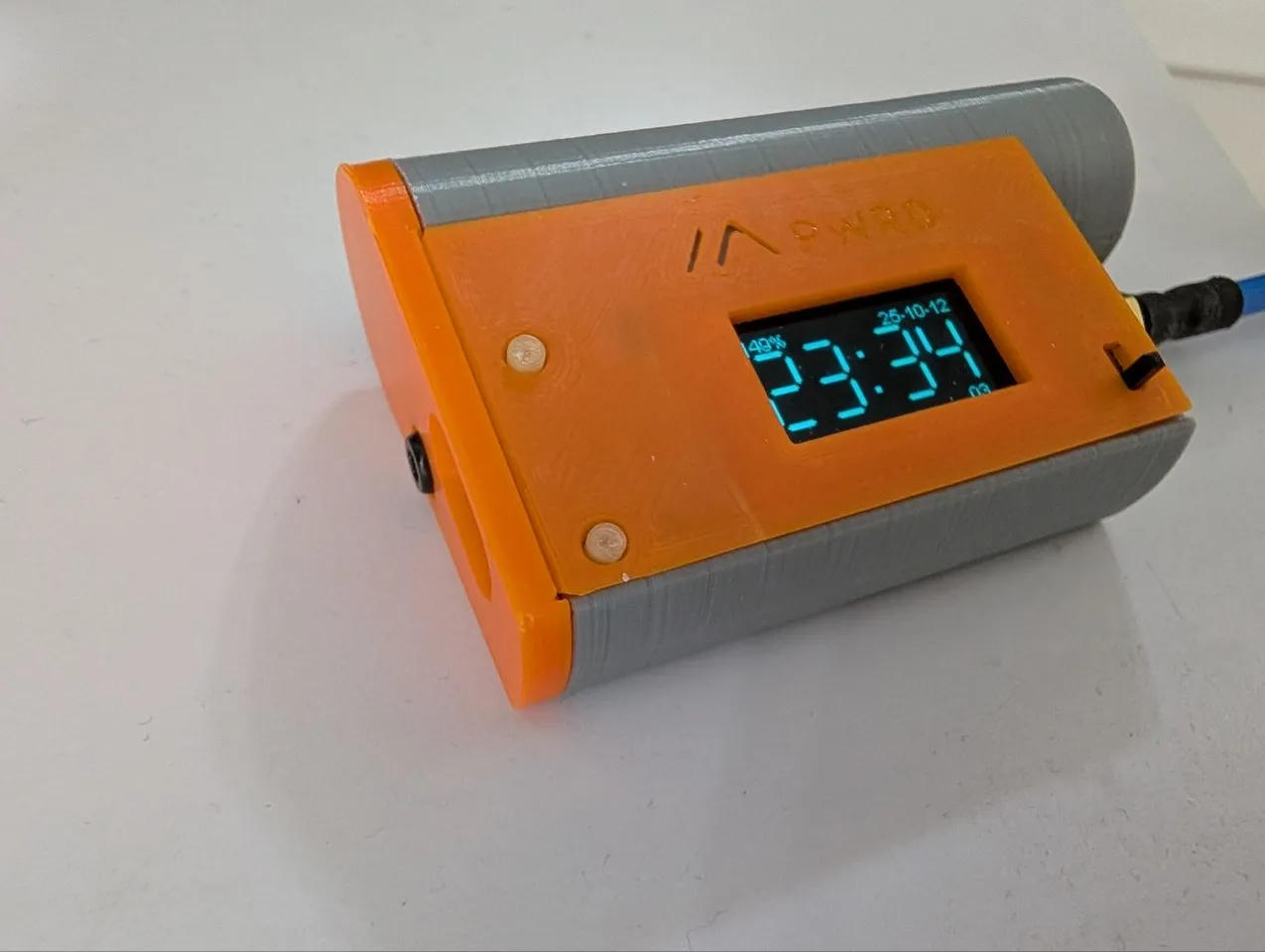
- Screwless Meshtastic case by ozhand — tool-free, perfect for quick field swaps
- GPS + 3000 mAh battery case by Adi-CEvil — clean antenna routing and room for the Quectel module
- IP65 outdoor mounting block by dchidelf — ideal for fixed solar repeaters on rooftops or towers
- Minimalist no-screw 18650 case by PERFstroy — great for pocket-sized portable nodes
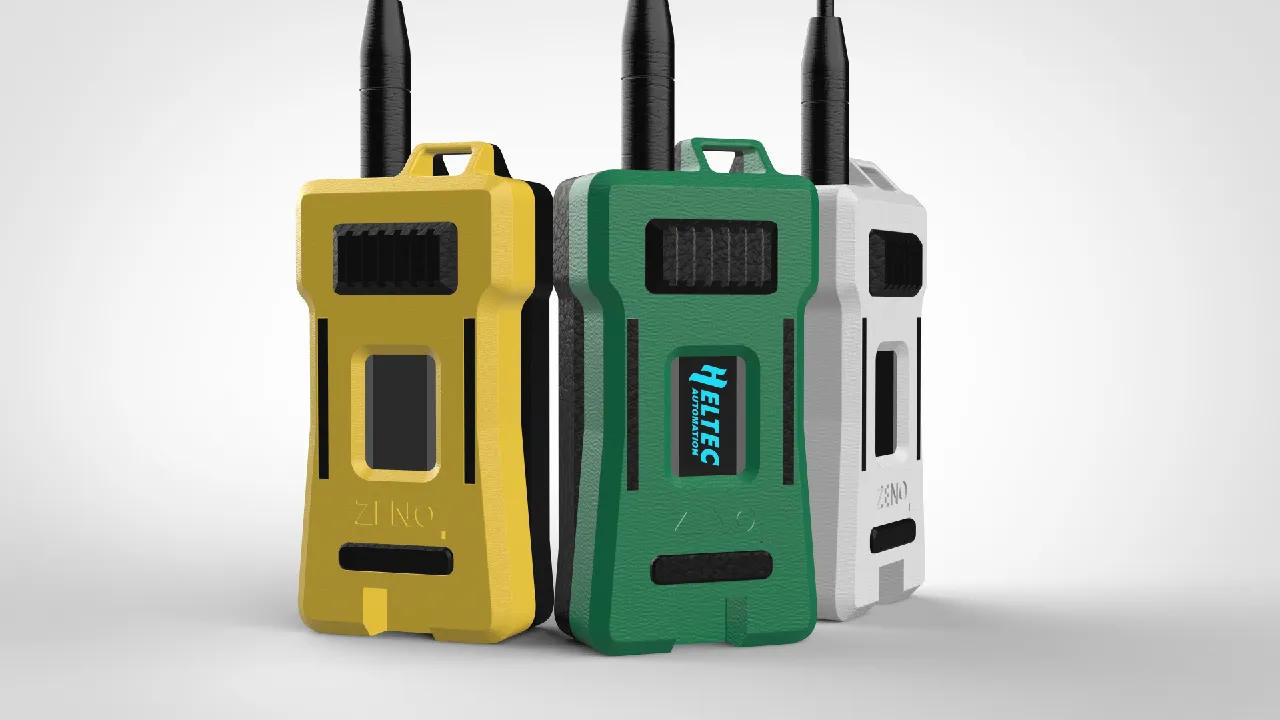
Search Printables for “heltecv4” here — there are now 50+ models, including pocket-pager styles and enhanced H1+ versions.
Real-World Projects Worth Copying
- Solar-powered mesh repeater using the official expansion housing + small 5–10 W panel (detailed build on LoRaMeshDevices)
- High-gain 915 MHz external antenna setups for rural coverage (users report 2–3× range improvement)
- GPS position beacons for hiking groups or vehicle tracking
- MeshCore firmware experiments (Heltec officially supports it on V4 as an alternative to Meshtastic)
YouTube has excellent 2026 walkthroughs covering range testing, battery life, and antenna tuning — search “Heltec V4 Meshtastic” for the latest field results.
Plug Into the US Meshtastic Community (This Is Where the Magic Happens)
Hardware is only half the story. The real power of Meshtastic comes from the people running nodes near you.
Must-Join Hubs
- Official Meshtastic Discord (~49k members) — #hardware channel for V4-specific questions
- r/meshtastic on Reddit — daily build photos and troubleshooting
- Local groups directory (dozens of active US meshes with their own Discords and node maps)
2026 Events Worth Attending
- Pacificon (West Coast) — dedicated Meshtastic track with live demos and Bay Area mesh groups
- Regional “mesh fests” and node-building workshops hosted by local groups (check your nearest Discord)
- ARRL field days and maker faires — Meshtastic is showing up more every year
Many US meshes run LongFast on 915 MHz with custom frequency slots to reduce interference. Joining your local group is the fastest way to learn what works in your area and get help mapping new nodes.
Your Next Move
The Heltec V4 is the best all-around board for serious US Meshtastic work in 2026: high power, solar-ready, great memory, and a thriving community of 3D-printable cases and proven builds.
Whether you’re upgrading an old V3 node, building your first solar repeater, or just want reliable off-grid comms for camping and emergencies, this board delivers.
Ready to build?
Grab a Heltec V4 from Rokland or Heltec’s US warehouse, flash it with the official web flasher, and drop into the Discord. Then tell me in the comments: What’s your first Heltec V4 project — portable go-bag, rooftop repeater, or GPS tracker?
The mesh is waiting. Let’s make it stronger.
Image Credits
- Hero and labeled board photos: Heltec Automation
- Colorful 3D-printed cases: Designed by Adi CEvil on Printables
- Studio and compact case photos: Community designs on Printables